
The European Alps are often marketed through famous ski names: Zermatt, Chamonix, St. Anton, Cortina, and dozens of purpose-built resorts designed around winter sports. They are spectacular, but they represent only one version of Alpine travel.
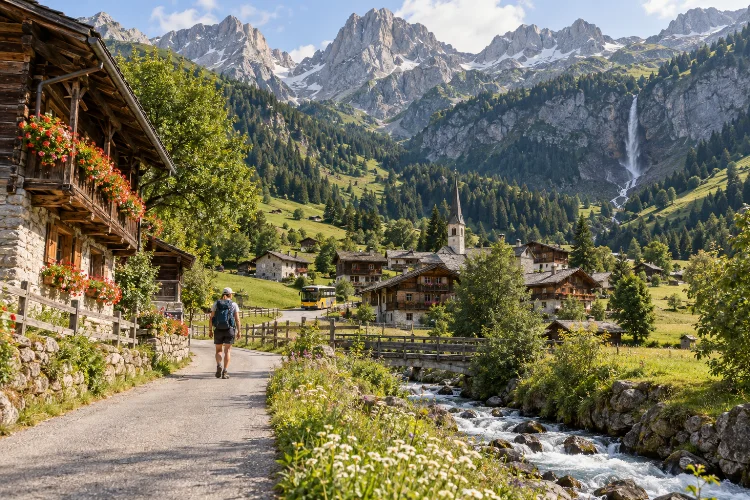
Move away from the biggest lift networks and another landscape appears. Traditional farming villages sit beneath limestone peaks, waterfalls drop into narrow valleys, mountain buses connect small communities, and hiking trails begin almost outside family-run guesthouses.
In many places, the rhythm is determined as much by agriculture, food, and local culture as by tourism.
Exploring Europe’s Alpine valleys beyond major ski resorts is therefore ideal for travelers who want mountains without building the entire vacation around skiing.
Switzerland’s Lauterbrunnen Valley, Austria’s Karwendel region, Italy’s Villnöss, Slovenia’s Soča Valley, and quieter corners of the French Alps all provide different versions of this experience.
The secret is choosing the valley first – and treating famous peaks as part of the landscape rather than the entire reason for visiting.
Choose Valleys With Real Communities, Not Only Lift Infrastructure
A mountain destination feels very different when people live there year-round.
Instead of starting your research with ski-area maps, look for valleys containing working farms, historic villages, local food production, nature parks, walking trails, and dependable transport.
Italy’s Villnöss, or Val di Funes, is a strong example. The South Tyrol tourism authority describes it as a relatively quiet Dolomites valley with few lifts, traditional farming culture, small villages, and direct access to the Puez-Geisler Nature Park.
The region also promotes local food traditions and public transportation rather than relying entirely on resort infrastructure.
That creates a completely different trip from staying beside a giant gondola complex.
You can walk between villages, visit farms, explore mountain pastures, eat regional products, and still wake up beneath some of the Dolomites’ most dramatic peaks.
Experience Lauterbrunnen From the Valley Floor
Lauterbrunnen is certainly famous, but many visitors treat it mainly as a gateway to higher attractions.
The valley itself deserves time.
Switzerland Tourism notes that Lauterbrunnen sits between Interlaken and the Jungfrau massif and is known for its extraordinary concentration of waterfalls.
Its hiking information identifies 72 waterfalls in the valley, with an easy 8-kilometre trail from Lauterbrunnen to Stechelberg taking roughly two hours
Instead of immediately heading toward Jungfraujoch or another headline viewpoint, spend a day at lower elevation.
Walk through meadows and farms, visit waterfalls, and continue toward villages such as Stechelberg, Mürren, or Gimmelwald.
This approach is also easier physically. You still get huge Alpine scenery without needing every day to involve expensive high-altitude transport.
A smaller guesthouse in the valley can make a more relaxed base than constantly moving between resorts and observation platforms.
Discover Austria Through the Karwendel
Austria’s Alpine identity is much bigger than its ski areas.
The Karwendel region offers broad mountain landscapes, traditional pastures, limestone peaks, and villages that feel closely connected to farming life.
One particularly interesting destination is Eng Alm, an Alpine settlement around 1,250 metres above sea level.
Austria’s official tourism site highlights its mountain huts, hiking access, dairy production, and more than 2,000 maple trees surrounding the pasture landscape. The area typically operates from early May until the end of October.
This is exactly why seasonal research matters.
A valley that feels wonderfully accessible in July may operate very differently in November.
Rather than trying to fit several Austrian resorts into one week, choose a base near Innsbruck or the Karwendel and explore slowly. Spend one day hiking, another visiting an Alpine pasture, and another simply following a valley road or local trail.
The mountains do not become less impressive because you skipped the ski lift.
Slow Down in Italy’s Villnöss Valley
The Dolomites attract enormous numbers of photographers and outdoor travelers, yet some valleys encourage a much slower pace.
Villnöss is one of them.
The valley sits beneath the Geisler/Odle peaks, part of the Dolomites UNESCO World Heritage landscape.
South Tyrol’s tourism authority emphasizes that Villnöss remains lightly developed, with traditional farms, smaller villages, local producers, and relatively limited lift infrastructure.
Public transport can also reduce the need for a rental car.
Official regional information notes rail connections to Brixen/Bressanone, followed by regular buses into Villnöss, while participating accommodations can provide access to regional public transport through the Südtirol Guest Pass
That makes it practical to stay several nights in St. Peter or St. Magdalena and explore on foot.
It is also a good destination for travelers who value food culture. Local farms, mountain cheese, traditional livestock breeds, and Slow Food initiatives make the valley interesting even when you are not hiking.
Sometimes the best Alpine day involves fewer kilometres and a much longer lunch.
Follow the River Through Slovenia’s Soča Valley
Not every Alpine valley is defined by glaciers and ski slopes.
Slovenia’s Soča Valley is built around an extraordinary turquoise river flowing beneath the Julian Alps.
Slovenia’s official tourism organization promotes the region for outdoor activities, natural scenery, local events, food, and its important First World War heritage.
It was also Slovenia’s first destination to receive European Destination of Excellence recognition for sustainable tourism development.
Bovec, Kobarid, and Tolmin make useful bases depending on which section interests you.
Hikers can explore mountain and riverside trails, while adventurous travelers can add rafting or kayaking. History-focused visitors can follow memorial routes and museums connected with the Isonzo Front.
The combination makes the valley especially useful for a longer stay.
If weather blocks a mountain hike, you still have river scenery, cultural sites, villages, and food experiences.
That sort of flexiblity is extremely valuable in the Alps.
Look Beyond the Famous French Alpine Resorts
French Alpine travel is often associated with giant ski domains, but southern mountain regions provide a very different atmosphere.
France’s official tourism site highlights the Queyras as one of the quieter treasures of the Southern Alps, characterized by stone-and-timber villages and dramatic protected landscapes.
Nearby Saint-Véran sits at around 2,042 metres and preserves traditional mountain architecture alongside access to hiking and astronomy experiences.
This is a useful reminder that “French Alps” does not automatically mean Chamonix or a huge interconnected ski area.
Villages in the Queyras, Mercantour, Vercors, or Écrins regions can provide hiking, wildlife, local architecture, and mountain culture without the same resort-focused feel.
Transport may require more planning, though.
French regional valleys often become easier with a rental car or carefully researched bus connections. Always investigate the last section before booking accomodation, particularly outside peak summer or winter seasons.
Make Hiking Part of the Journey, Not a Daily Competition
You do not need to complete a major summit every day to experience the Alps properly.
Valley walks are often underrated because they appear less dramatic on hiking apps. In reality, they can reveal farms, rivers, forests, waterfalls, churches, and village life that high-elevation excursions skip completely.
Lauterbrunnen’s valley walk demonstrates this perfectly. It combines huge cliffs and waterfalls with a relatively easy route, while higher trails around Mürren offer more elevation when you want it.
Alternate difficulty levels.
One day might involve a challenging mountain hike. The next can be an easy riverside walk, village exploration, local museum, or mountain-bus excursion.
This rhythm is especially important on trips longer than one week.
Your legs will appreciate it, and you will definately notice more of the region.
Visit Outside Peak Ski Season – But Check What Is Open
Late spring, summer, and early autumn can be excellent periods for valley-focused travel.
The landscapes become greener, hiking access improves, livestock returns to mountain pastures, and local food traditions become more visible.
However, shoulder season is complicated.
Some cable cars, mountain huts, restaurants, accommodation, and buses may close between their summer and winter seasons. Weather can also vary dramatically with elevation.
Before committing to a quiet valley in May or October, check three things: local transportation, hiking conditions, and seasonal opening dates.
Do not assume that fewer tourists automatically means every service is still running.
A peaceful mountain village is wonderful.
A peaceful mountain village where the only restaurant is closed can become slightly too authentic.
Travel in a Way That Protects the Valleys
Alpine valleys are environmentally sensitive and often have limited space for roads, parking, and tourism development.
The Alpine Convention notes that tourism is economically important across the mountain region but emphasizes the need to balance visitor activity with protection of landscapes, cultural heritage, and local communities. It also encourages alternative mobility and year-round forms of tourism
Travelers can contribute without making the vacation complicated.
Use trains and buses where they work well. Stay several nights rather than driving through for one photograph. Spend money in locally owned guesthouses, cafés, farms, and restaurants.
Most importantly, do not treat every beautiful valley as something that must be “completed.”
Staying longer in one region usually creates a richer experience than racing through four valleys in four days.
Europe’s Alpine valleys offer far more than famous ski resorts.
Lauterbrunnen brings waterfalls and traditional villages, Karwendel preserves Alpine pasture culture, Villnöss combines Dolomite scenery with farming and food traditions, while Slovenia’s Soča Valley mixes mountains, river landscapes, and history.
The best strategy is to choose fewer valleys and explore them more deeply. Mix demanding hikes with easy walks, use public transport where practical, and research seasonal conditions before booking quieter areas.
Most importantly, pay attention to what exists beneath the famous peaks.
For your next Alpine trip, choose one valley that interests you and stay for three or four nights rather than passing through in an afternoon. You may discover that Europe’s quieter mountain communities are every bit as memorable as its biggest resorts.
