
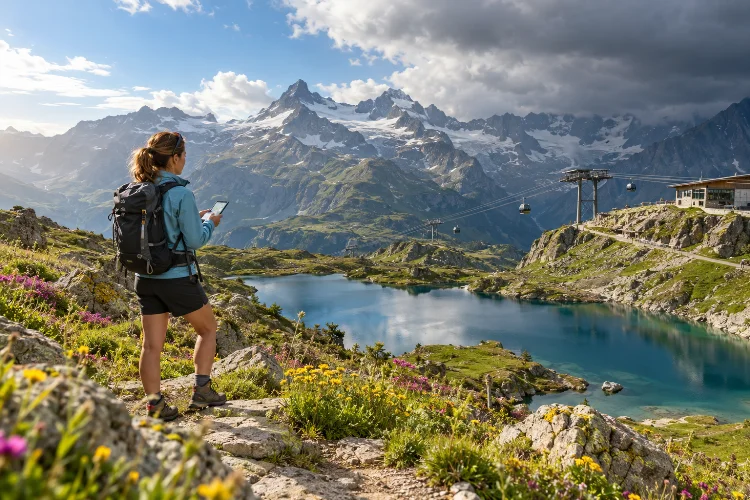
Summer in Europe’s mountain regions can look almost effortless in photographs. Green valleys, clear lakes, wildflower-covered slopes, and cable cars rising toward dramatic peaks create the impression that all you need is a pair of hiking shoes and a sunny forecast.
Real mountain travel is more complicated. Temperatures can change dramatically with elevation, high trails may still hold snow well into summer, afternoon weather can shift quickly, and lift schedules can determine whether a planned hike is even possible.
Climate change is adding another layer: the Alpine Convention reports that temperatures in the Alps have risen by almost 2°C since the late nineteenth century, roughly twice the rate seen across the wider Northern Hemisphere.
That is why advanced summer travel strategies for European mountain regions should focus on flexibility rather than packing every day with fixed plans.
From Switzerland and Austria to the Dolomites and French Alps, smart summer travel means matching activities with elevation, weather, transportation, and your own energy.
Choose Your Mountain Base Before Your Hikes
Start with where you will sleep rather than which summit you want to photograph. A good base gives you several different outdoor options within easy reach.
That could mean staying in Interlaken or another Bernese Oberland hub in Switzerland, Innsbruck in Austria, Cortina in the Dolomites, or a French Alpine town that combines trails with lakes and regional transport.
Multiple options become extremely useful when the weather changes.
If a high-elevation trail is covered by cloud, you can switch to a valley walk, lake excursion, museum, or easier forest route without losing the whole day.
This is usually more practical than moving accomodation every night to chase individual hikes.
Three or four nights in one mountain region also gives you time to understand its transport system, trail markings, lift network, and local weather patterns before moving on.
Understand What Altitude Does to Summer Weather
Do not pack according to the temperature outside your city hotel.
Switzerland Tourism notes that temperatures can drop by roughly 1°C for every 100 meters of elevation. It also warns that mountain conditions above 2,000 meters can remain cold enough for snow even during summer, while weather can change quickly throughout the day.
That means a warm morning beside a lake tells you very little about conditions at a summit station.
Use layers.
A light base layer, insulating layer, waterproof shell, sun protection, and something warm should cover far more situations than one heavy jacket. Switzerland Tourism also recommends sturdy footwear, rain protection, warm clothing, and sun protection for mountain hiking.
Keep those layers in your daypack even when the valley forecast looks perfect.
Mountains are very good at making optimistic packing decisions look foolish.
Start Bigger Hikes Early
Summer days are long, but that does not mean your most demanding hike should begin at noon.
Early departures give you cooler temperatures, quieter trails, and more time to respond if the route takes longer than expected. They also create a larger safety margin if weather deteriorates later.
Official Swiss hiking guidance recommends planning the route and duration in advance, allowing extra time, monitoring weather changes, and turning back before conditions become problematic.
This is especially important on steep or exposed mountain trails.
Instead of scheduling your hardest excursion immediately after breakfast at 10:30, consider beginning around the first practical transport connection of the morning.
Then use the afternoon for easier activities.
An early hike followed by a lake swim, café stop, spa visit, or relaxed village walk often produces a better summer day than one exhausting expedition stretching from late morning into evening.
Check Trail Difficulty More Carefully Than Distance
A seven-kilometer Alpine route is not automatically an easy walk.
Elevation gain, surface conditions, exposure, snowfields, scrambling sections, and altitude can make a short trail significantly harder than a longer valley route.
Switzerland’s trail system illustrates the distinction well. Ordinary hiking trails are different from mountain hiking trails, which may cross steep and exposed terrain, while Alpine hiking routes can involve snowfields, scree, glaciers, or short climbing sections.
Study both difficulty and terrain before choosing a route.
The same principle applies elsewhere. Cortina’s official hiking information describes more than 400 kilometers of trails ranging from relaxed walks to routes intended for more experienced hikers.
Do not choose a hike because the photo looks impressive.
Choose it because the route matches your actual fitness, experience, footwear, and comfort with heights.
That is a much better definition of an enjoyable mountain day.
Use Cable Cars Strategically
Summer lift networks can completely change what is possible in a day.
In the Dolomites, for example, Cortina operates summer lifts that provide access to high-altitude hiking areas and via ferrata starting points. Pedestrian passes are available for hikers who want to use several lifts during the season.
Using a lift is not “cheating.”
It can remove a repetitive climb through lower forest, giving you more time and energy for the landscape you actually came to experience.
But always check operating hours.
Missing the final descent can turn a comfortable day hike into a much more complicated situation. Seasonal opening dates also vary, so never assume that every lift shown on a summer trail map runs throughout May, June, September, or October.
Build some flexiblity into the route in case wind, maintenance, or weather affects operations.
Balance High Mountains With Lakes and Valleys
Not every day needs to involve gaining 1,000 meters of elevation.
The European Alps offer lakes, waterfalls, forests, valleys, pasture landscapes, and historic villages alongside their famous peaks.
Austria Tourism emphasizes this variety, describing summer activities that combine hiking and climbing with mountain lakes, Alpine pastures, cycling, and village experiences.
France offers the same kind of contrast.
Its Alpine regions include major mountain landscapes alongside lakes such as Annecy, Léman, Aiguebelette, and Bourget, giving travelers opportunities to alternate demanding mountain activities with easier water-based days.
This alternating rhythm is especially useful on longer trips.
A summit day could be followed by a lake day. A high Alpine hike might be followed by a slow valley walk.
You will still experience dramatic scenery without turning the vacation into an endurance test.
Keep One Day Flexible for Weather
A completely pre-booked mountain itinerary looks efficient until the first bad-weather system arrives.
Instead of assigning your most important hike to one fixed Tuesday months in advance, identify a two- or three-day window and choose the best day once the local forecast becomes clearer.
Keep museums, spas, scenic train journeys, food experiences, or lower-altitude walks available as backup plans.
Weather flexibility becomes increasingly important as Alpine climate conditions change. The Alpine Convention notes rising temperatures, changing precipitation patterns, and greater unpredictability in natural hazards across the region
The smartest itinerary is therefore not the one with the most reservations.
It is the one that can change without collapsing.
When staying four nights in a mountain valley, one rainy day is manageable. When staying for only one night, it can erase the main reason you travelled there.
Think About Heat as Well as Cold
Travelers often worry about getting cold in European mountains but forget that valleys can become hot in midsummer.
Higher elevations may provide relief, but hiking under strong sun still increases your need for water, shade, sun protection, and rest.
Austria Tourism even promotes higher mountain environments and Alpine lakes as summer “coolcation” options during periods of heat
Carry enough water for the route and check whether reliable refill points exist.
Do not assume every hut, spring, or mountain restaurant will be open.
Sun exposure also becomes stronger at altitude. Use sunscreen, sunglasses, and a hat, particularly on open slopes where there is little shade.
Schedule slower periods during the hottest part of the day when conditions demand it.
Starting early is again the easiest solution.
Travel More Sustainably Between Mountain Regions
Summer tourism can place significant pressure on Alpine communities and ecosystems.
The Alpine Convention notes that tourism is economically important across the Alps but encourages sustainable tourism practices and alternative mobility solutions to protect natural and cultural landscapes.
Using trains and buses between mountain regions can reduce both driving stress and parking problems.
Then rent a car only where public transportation genuinely limits access.
Stay several nights instead of repeatedly driving into popular valleys for short visits. Use marked trails and respect closures designed to protect wildlife or fragile environments.
The Alpine Convention’s current “Be Part of the Mountain” initiative specifically addresses the growing pressure of tourism and outdoor recreation on Alpine ecosystems.
Responsible travel does not need to make the trip less enjoyable.
In many cases, travelling slower makes it better.
Summer travel in Europe’s mountain regions works best when flexibility matters more than a perfect spreadsheet.
Choose strong regional bases, start demanding hikes early, understand how altitude changes weather, and match trails to your actual experience rather than their Instagram appeal.
Use cable cars when they improve the day, alternate high mountain adventures with lakes and valley walks, and always keep at least one weather-friendly backup option.
Most importantly, avoid forcing every famous viewpoint into the same trip.
Before booking, choose two or three mountain regions you genuinely want to experience and stay long enough to adjust to real conditions.
A slower, adaptable itinerary will definately give you more enjoyable hiking, safer mountain days, and far more time to appreciate Europe’s extraordinary Alpine landscapes.
