
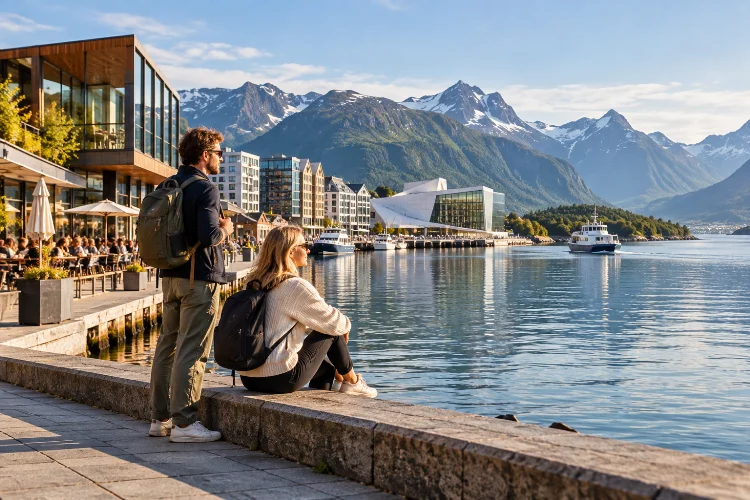
A Northern European trip does not have to be a choice between stylish capitals and remote wilderness. In many destinations, the two experiences sit surprisingly close together.
You can spend the morning exploring museums and cafés, then find yourself hiking through forests, sailing between islands, or watching a fjord by late afternoon.
The challenge is building an itinerary that combines both without turning every day into another transfer.
Stockholm, Oslo, Bergen, Helsinki, and Tallinn all provide strong examples because nature can be reached directly from the city or with relatively simple public transportation.
Learning how to combine major cities and nature across Northern Europe is therefore mostly about choosing good bases.
Instead of checking into a different hotel every night, stay longer in cities that provide easy access to national parks, islands, mountains, and coastal landscapes.
The result is a trip with more variety, fewer exhausting travel days, and enough time to enjoy both urban culture and the region’s remarkable outdoor spaces.
Choose Cities That Already Have Nature on Their Doorstep
Start by looking for cities where the transition from urban sightseeing to outdoor exploration is easy.
Stockholm is one of the strongest examples. The city itself is built across 14 islands, while the Stockholm Archipelago begins only about 20 minutes from central areas and contains more than 30,000 islands.
That means you do not necessarily need to dedicate several days to reaching remote Swedish landscapes.
You could spend two days exploring Stockholm’s museums and neighbourhoods, then use another day for Vaxholm, Grinda, Fjäderholmarna, or another nearby island.
Helsinki offers a similar advantage.
Nuuksio National Park can be reached from the capital region in less than an hour by public transport, providing forests, lakes, marked trails, picnic areas, and even overnight camping possibilities.
Cities like these make city-and-nature travel much more efficient because the outdoor experience does not require changing accomodation.
Use Day Trips Before Adding Another Hotel
Not every natural destination needs to become another overnight stop.
Changing hotels consumes more time than it appears to on paper. You have to pack, check out, travel, find your new accommodation, and settle in again.
A well-designed day trip avoids all of that.
Tallinn works particularly well for this strategy. Lahemaa National Park is only around an hour’s drive from the Estonian capital and covers about 725 square kilometres of forests, wetlands, beaches, coastal landscapes, and historic manor areas.
You could therefore spend several nights in Tallinn, use one day for the medieval Old Town and contemporary neighborhoods, and dedicate another to Viru Bog, coastal villages, or the forests of Lahemaa.
This is often more relaxing than spending one night in Tallinn, moving into the countryside, and immediately packing again.
Use overnight stays in nature when the destination genuinely benefits from slower exploration. Otherwise, keeping one city base can be far more convinient.
Turn Transportation Into Part of the Nature Experience
In Northern Europe, getting from one city to another can sometimes become a sightseeing experience itself.
The Bergen Railway is an excellent example. The journey between Oslo and Bergen takes roughly seven hours and crosses almost 500 kilometres of Norwegian landscapes, including valleys and the Hardangervidda mountain plateau.
That means the transfer does not need to be treated as a wasted day.
You could spend several nights exploring Oslo, board the railway toward Bergen, enjoy changing scenery throughout the journey, and then use Bergen as the base for the next outdoor section.
This approach is much more efficient than repeatedly flying between urban destinations and then booking seperate excursions simply to see scenery.
When planning your route, ask whether the transport itself adds something meaningful.
Scenic railways, coastal ferries, and archipelago boats can blur the line between transportation and sightseeing.
Let Bergen Be the Gateway to the Fjords
Some cities deserve extra nights because their surrounding region is as important as the city itself.
Bergen is a perfect example.
The city combines historic neighborhoods, museums, restaurants, and the UNESCO-listed Bryggen area with easy access to mountains and western Norway’s fjord landscapes. Official tourism information highlights nearby hiking as well as connections to fjord excursions.
Instead of staying only one night, consider using Bergen for three or four.
One day can focus on the city. Another might include Mount Fløyen or Mount Ulriken, while an additional day can be reserved for a fjord journey.
Public-transport itineraries from Bergen can reach areas such as Hardangerfjord, while organized routes combine trains, boats, and other transportation through western Norway.
This is a useful model for longer journeys: identify one urban base that opens the door to several different landscapes.
You reduce hotel changes while increasing the range of experiences.
Use Stockholm’s Archipelago at Different Depths
Nature near a city does not have to mean a single quick excursion.
Stockholm’s archipelago illustrates how travelers can adjust the outdoor portion of the trip according to available time.
If your schedule is tight, islands such as Fjäderholmarna and Vaxholm are among the easier options. Visit Stockholm notes that several islands can be reached within roughly an hour of downtown.
With more time, you can move farther into the outer archipelago and stay overnight.
Public ferries and other boat services connect Stockholm with destinations including Vaxholm, Grinda, Sandhamn, Möja, Nämdö, and Utö.
This creates a useful planning formula.
A short trip might combine three nights in Stockholm with one island day trip. A slower itinerary could include four city nights followed by two nights on an island.
You are using the same geographic area, but adjusting the intensity according to your schedule.
Balance Urban Days With Outdoor Days
One common mistake is putting every outdoor experience together.
Three consecutive days of hiking, ferry trips, and long excursions may sound exciting when creating the itinerary. In reality, physical fatigue can make the third day much less enjoyable.
Alternate the pace instead.
After a full day hiking in Nuuksio, spend the next day exploring Helsinki’s design districts, markets, museums, cafés, or saunas. After a long fjord excursion from Bergen, keep the following morning flexible.
This creates contrast.
Urban days provide restaurants, culture, shelter from bad weather, and easier logistics. Nature days offer open space, movement, scenery, and a break from busy streets.
Neither needs to dominate.
For a two-week journey, a roughly balanced mix of city exploration, nature excursions, transport days, and slower periods usually works better than attempting one major adventure every day.
A memorable itinerary needs rhythm, not just attractions.
Match the Nature Experience to the Season
Northern European landscapes change dramatically throughout the year.
Summer makes island-hopping, hiking, swimming, and long outdoor days easier. The Stockholm Archipelago has its broadest range of accommodation and restaurant options during summer, although some islands remain active year-round.
Autumn can offer quieter trails and changing forest colours. Winter turns Finland and Norway into completely different destinations, while cities become useful bases for warming up between outdoor experiences.
Spring has its own advantages, especially for travelers who prefer fewer crowds.
The important point is to avoid copying a summer itinerary into January.
A three-hour outdoor excursion might be easy during long June daylight but feel very different during a cold, short December day.
Check seasonal ferry schedules, trail conditions, opening hours, and daylight before finalizing your route.
Being flexible about the exact outdoor activity can also help when weather changes unexpectedly.
Keep Nature Access Simple on Multi-Country Trips
If you are visiting several countries, resist the temptation to include the most famous wilderness area in each one.
That can create enormous transfers.
A route such as Stockholm → Helsinki → Tallinn → Oslo → Bergen already provides access to islands, forests, coastal landscapes, mountains, and fjords without requiring multiple remote detours.
Stockholm gives you the archipelago. Helsinki provides straightforward access to Nuuksio and Sipoonkorpi national parks. Tallinn works as a base for Lahemaa, while Oslo offers easy access to forest and fjord environments.
The islands of the inner Oslo Fjord, for example, are reachable by short ferry rides from the city center and offer beaches and walking opportunities.
Then Bergen can provide the more dramatic nature finale.
This layered approach is often smarter than traveling hundreds of additional kilometres simply to tick off another famous national park.
Leave Room for Weather Changes
Outdoor-focused itineraries need flexibility.
Rain in Bergen, strong winds around an archipelago, or poor visibility in mountain areas can change the experience completely.
Instead of locking every nature excursion to an exact day months ahead, identify which activities genuinely require advance booking and keep the rest movable when possible.
If Tuesday looks rainy and Wednesday clear, you might switch a museum day with a hiking day.
This is another reason longer city stays work so well.
Spending four nights in Bergen gives you several chances to choose the best weather window for a fjord or mountain experience. Staying only one night gives you whatever weather happens to arrive.
Flexible planning does not mean travelling without a plan.
It means creating enough space for the itinerary to react to real conditions.
That becomes especially important when nature is one of the main reasons for travelling.
Combining major cities and nature across Northern Europe does not require constant hotel changes or expensive journeys into remote wilderness.
Many of the region’s best urban destinations already sit beside forests, islands, mountains, fjords, and national parks.
Use Stockholm for the archipelago, Helsinki for nearby forests, Tallinn for Lahemaa, and Oslo or Bergen as gateways to Norwegian landscapes. Choose day trips when nature is close, and add overnight stays only when the destination deserves deeper exploration.
Most importantly, alternate energetic outdoor days with slower urban experiences and leave some flexibility for weather.
Before booking your trip, look at every major city on your route and search within a one- to two-hour radius. You may discover that the best nature experience is already much closer than you expected.
